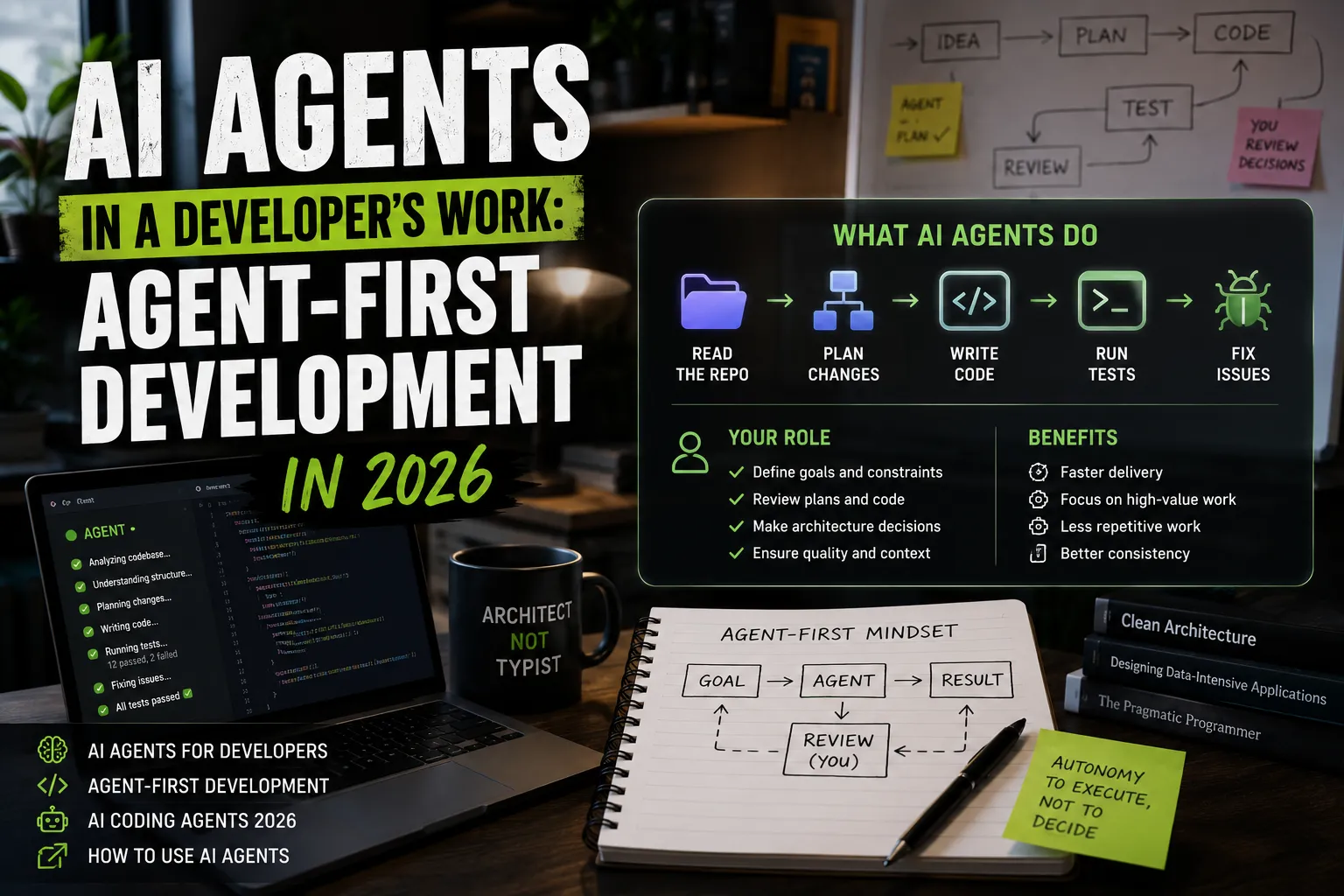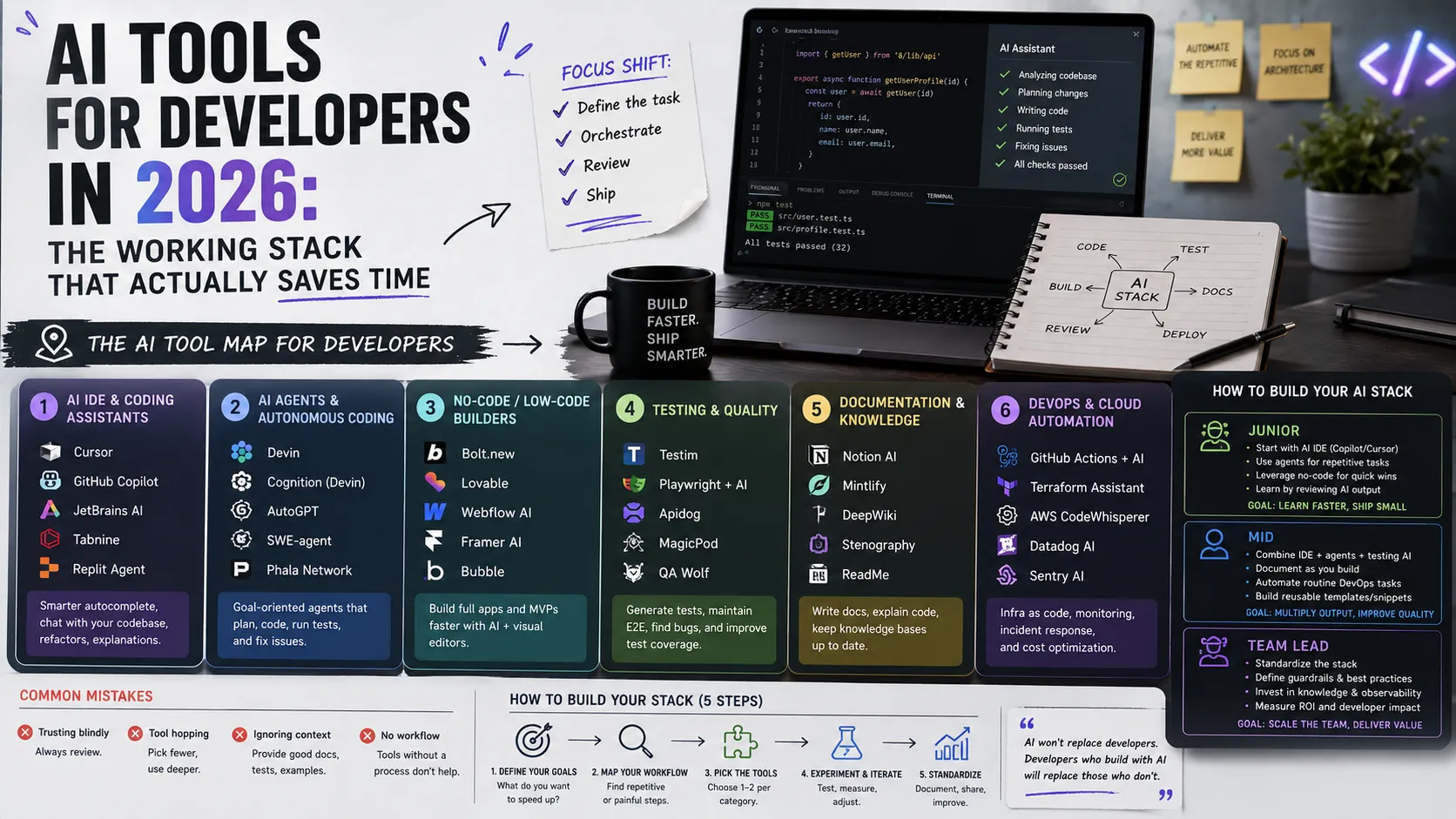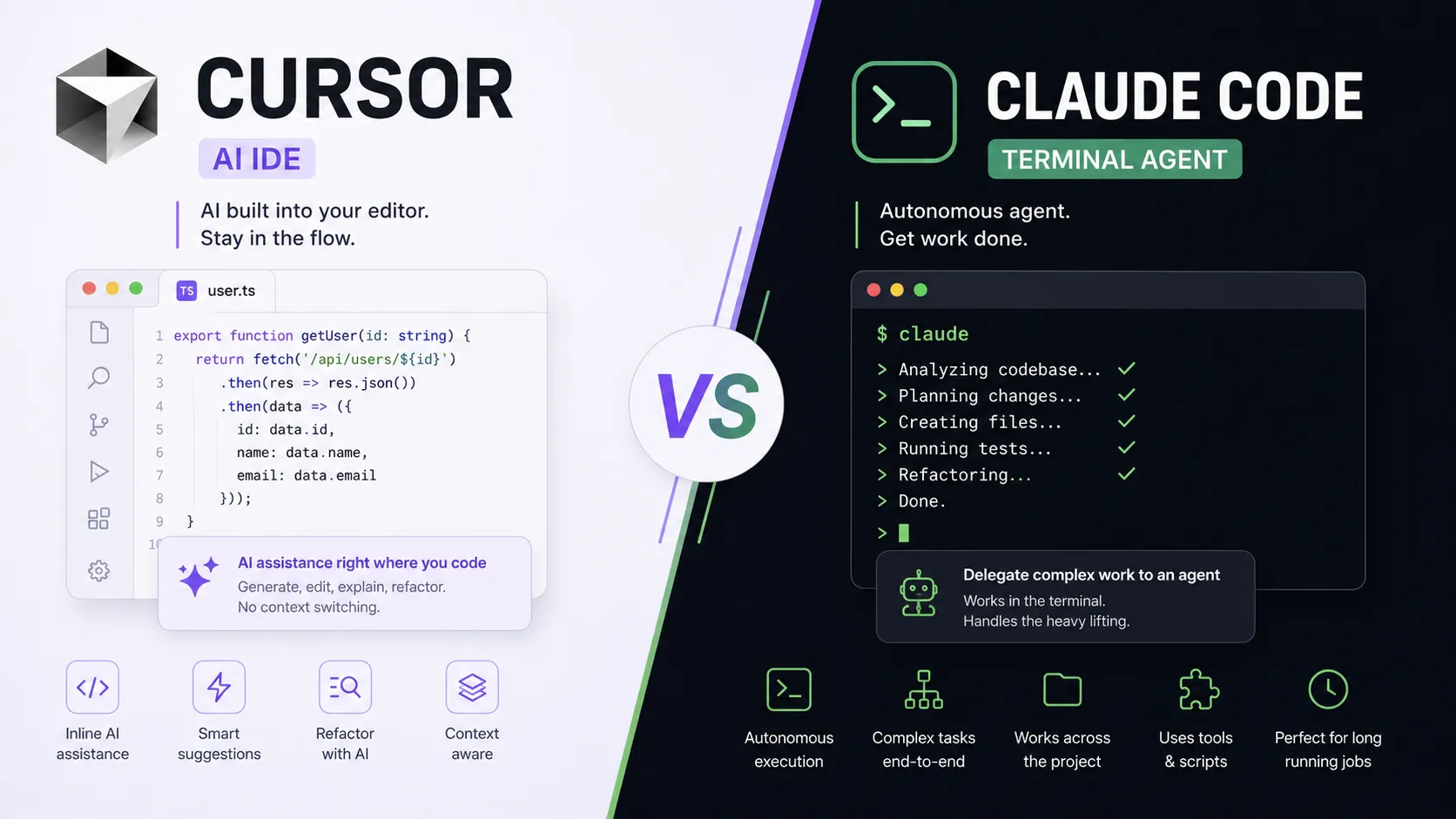

We have already written separately about the tools of the AI era. But a tool is a variable: Cursor today, something else tomorrow. What stays are the skills — without which working with AI in 2026 is no longer a "plus on your résumé" but a baseline requirement. This article is about exactly those, and it's useful not only to developers but to designers, video makers, and other digital specialists too.
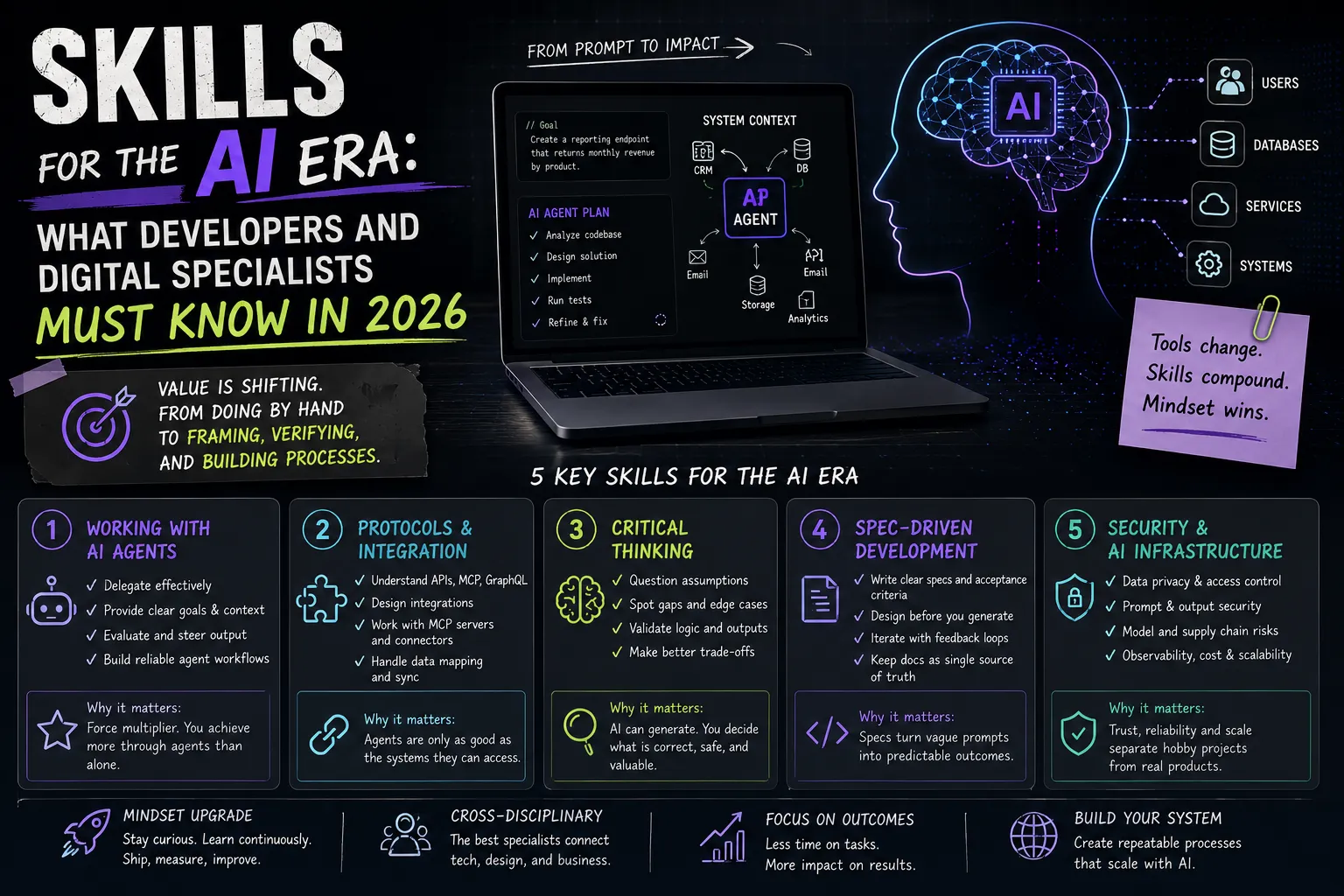
The core thesis is simple: a specialist's value is shifting from "being able to do it by hand" to "being able to frame the task, verify the result, and build a process around it." Let's unpack what that means concretely and which five skills are becoming key.
What Changes in the Specialist's Role
The fear that "AI will devalue my work" does not hold up in practice. Something else happens: new tasks appear. Instead of writing every line, a specialist increasingly verifies, edits, and "manages" AI output — and builds processes around agents and protocols.
The numbers back this up. Per a survey reported by IT Pro, 81% of developers now spend more time reviewing generated code — a whole layer of "invisible work" of checking and validation has emerged. And the Stack Overflow Developer Survey shows a paradox: most people already use AI daily but trust its output cautiously. It's exactly at this "I use it but I verify it" junction that a new skill set is born. This is a direct consequence of the shift toward agent-first development.
Five Key Skills of the AI Era
- Working with AI agents, not just "chat". Being able to hold a conversation with a chatbot is now baseline literacy, not a skill. The value is in the ability to build multi-step flows: framing the task and its "done" criteria clearly, giving the agent the right tools, breaking a big goal into steps, and overseeing execution. That's a distinct competence — worth reading about in more detail in the piece on AI agents in a developer's work and in the guide to the working AI stack.
- Understanding protocols and integration. An agent is only useful when it can reach real data and systems. So the value of understanding how integration works keeps rising: APIs, RAG (retrieval-augmented generation — connecting knowledge), and especially MCP — the "USB-C for AI". The key is not just "knowing these exist" but understanding where each approach actually works and where it creates more problems than it solves. RAG is, by many accounts, one of the highest-leverage AI-engineering skills of 2026.
- Critical thinking and validation. This is skill number one in an era when AI produces confidently wrong answers. A critical specialist does not take output on faith: they review code, fact-check, cross-reference multiple sources, question assumptions, and test. In spirit it's close to the work of a QA engineer: not "does it run?" but "how could this break and where is it lying?" Without tests and verification, AI's speed turns into fast accumulation of errors.
- Security and ethics. When an agent has access to your systems, security becomes part of daily work rather than a separate department's concern. This includes data confidentiality, proper access management (least privilege), auditing the agent's actions, and protection against prompt injection. Plus the ethical side: understanding which data you may hand to a model and which you may not.
- Building AI infrastructure. The deepest skill is being able to prepare an environment where AI produces stable results: quality data, action logging, monitoring, sandboxing, versioned specifications. This is systems engineering, not "prompting a model." This is exactly where the line runs between those who "play with GPT" and those who build reliable processes.
Why "Prompt Engineering" Is No Longer Enough
A few years ago, "writing a nice prompt" felt like a profession of its own. In 2026 it's more like basic hygiene. The future is not in the prompt but in preparing the infrastructure: data, access, protocols, and specifications.
The field even earned a name for this — context engineering. As a CIO overview explains, at production scale a single prompt cannot deliver the accuracy, memory, and governance you need — you need persistent artifacts: configs, documentation, and context files that shape an agent's behavior across sessions. Hence the rise of spec-driven development: instead of "talking through" a task, you write a clear specification (SPEC.md, AGENTS.md) that steers both humans and agents. A weak spec, at scale, produces systematic error.
The Portable Skills Layer
A separate trend worth knowing is skills as a portable knowledge layer, independent of any specific tool. The idea: describe a skill (how to do a certain task, by which rules, with which resources) as a specification-folder that different systems understand.
Anthropic formalized this as Agent Skills — folders of instructions, scripts, and resources that an agent loads for a specific task — and released the format as an open standard. The career value is enormous: you describe your approach once (code style, brand guide, review checklist), and that "skills layer" works in Cursor, in Claude Code, and in other environments. Your expertise becomes portable and reusable rather than tied to a single app.
FAQ
Do I need to learn all five skills at once?
No. Start with the two fundamentals — working with agents and critical thinking — because they're needed daily regardless of role. Add protocols, security, and infrastructure as your tasks grow more complex.
Is prompt engineering now useless?
Not useless, but insufficient. The ability to phrase a request clearly isn't going anywhere — it just became the floor, not the ceiling. The next level is context, specifications, and the infrastructure around the prompt.
Does this apply only to developers?
No. Critical thinking, validation, and the ability to frame a task for AI are equally needed by designers, marketers, and video makers. The tool details change, but the "direct and verify" principle is universal across digital professions.
What This Means for Your Portfolio
AI-era skills should not only be held but shown. In your cases, describe the process, not just the result: how you framed the task for the agent, what you verified, which decisions you kept, how you handled security. That's more convincing than any list of technologies. If you are unsure how to structure cases, start with the guide How to Make a Portfolio.
Add the relevant skills and tools to your profile, tag your project technologies, and see how other specialists present their work. In a world where AI writes the code, your edge becomes how you direct it.
Ready to act?
- Create your own portfolio: https://searchtalent.dev/en/projects/new
- Skill and technology directory: https://searchtalent.dev/en/talents/skill
- Browse other specialists' projects: https://searchtalent.dev/en/projects
- More articles: https://searchtalent.dev/en/articles