
The video market grows every year, but people earn from it very differently. An "editor who takes on anything" competes with thousands of others and undercuts their price on every job. A specialist who says clearly, "I turn podcasts into video" or "I make short-form for performance ads," gets higher rates and repeat work — because the client sees an expert, not just a pair of hands.
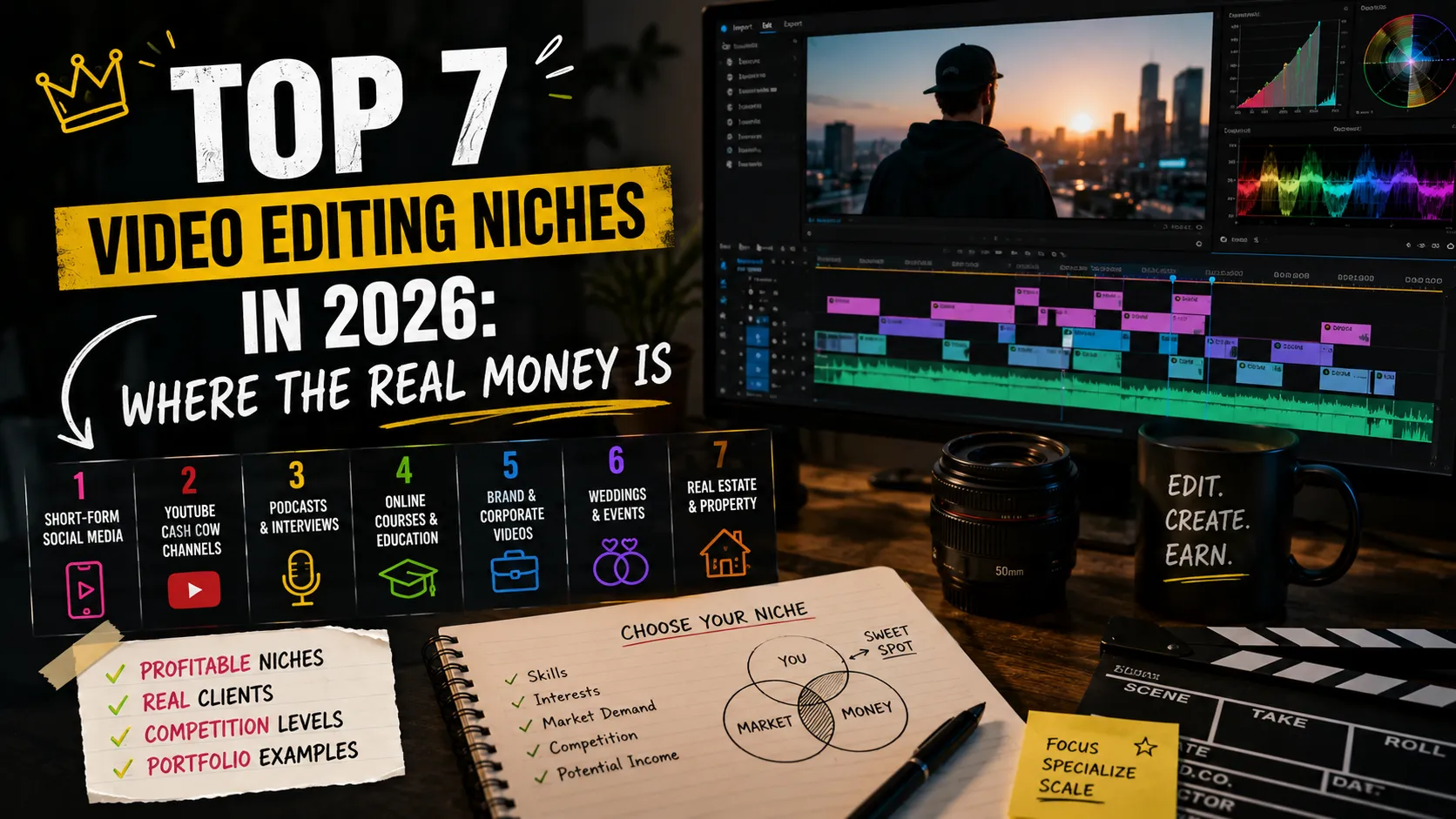
In 2026, niching down is not about narrowing your options — it is the focus that sets you apart in a feed of identical offers. In this guide we will unpack what actually makes a niche profitable, walk through the top 7 directions with concrete formats, client types, and competition levels, and finish with an algorithm for choosing the niche that fits you — plus what to put in your SearchTalent portfolio for each one.
What Makes a Niche Profitable
Before the list, it helps to know the criteria. A "good" niche is not the trendy one — it is where three things meet:
A steady stream of content. The client does not make one video a year; they publish regularly. That turns one-off jobs into predictable income. Clients who can pay. A business with a marketing budget pays differently than a student on a deadline. The niche needs money, not just requests. Repeat work and room to scale. One good project should lead logically to the next — monthly retainers, episode series, packages. The ideal niche has all three. Here are seven directions where those conditions genuinely hold in 2026.
1. YouTube Video Editing
Format: vlogs, educational videos, talking-head content, reviews, interviews, unboxings.
Typical clients: solo creators, experts, small media, educational channels.
Competition: high at entry, but demand is enormous — YouTube remains the main video platform and creators constantly need hands.
Why it pays: regular uploads turn into an editing retainer — "N videos a month" for a fixed fee. This is the most stable income type on the whole list.
Example brief: "I publish twice a week and need 20-minute videos edited: speech cleanup, b-roll, captions, light graphics, and a thumbnail."
What to show in your portfolio: 2-3 full videos in different styles (dynamic and calm), ideally with a before/after of the raw footage. Describe the case as a story: hours of raw material, what you cut, how you kept the pace.
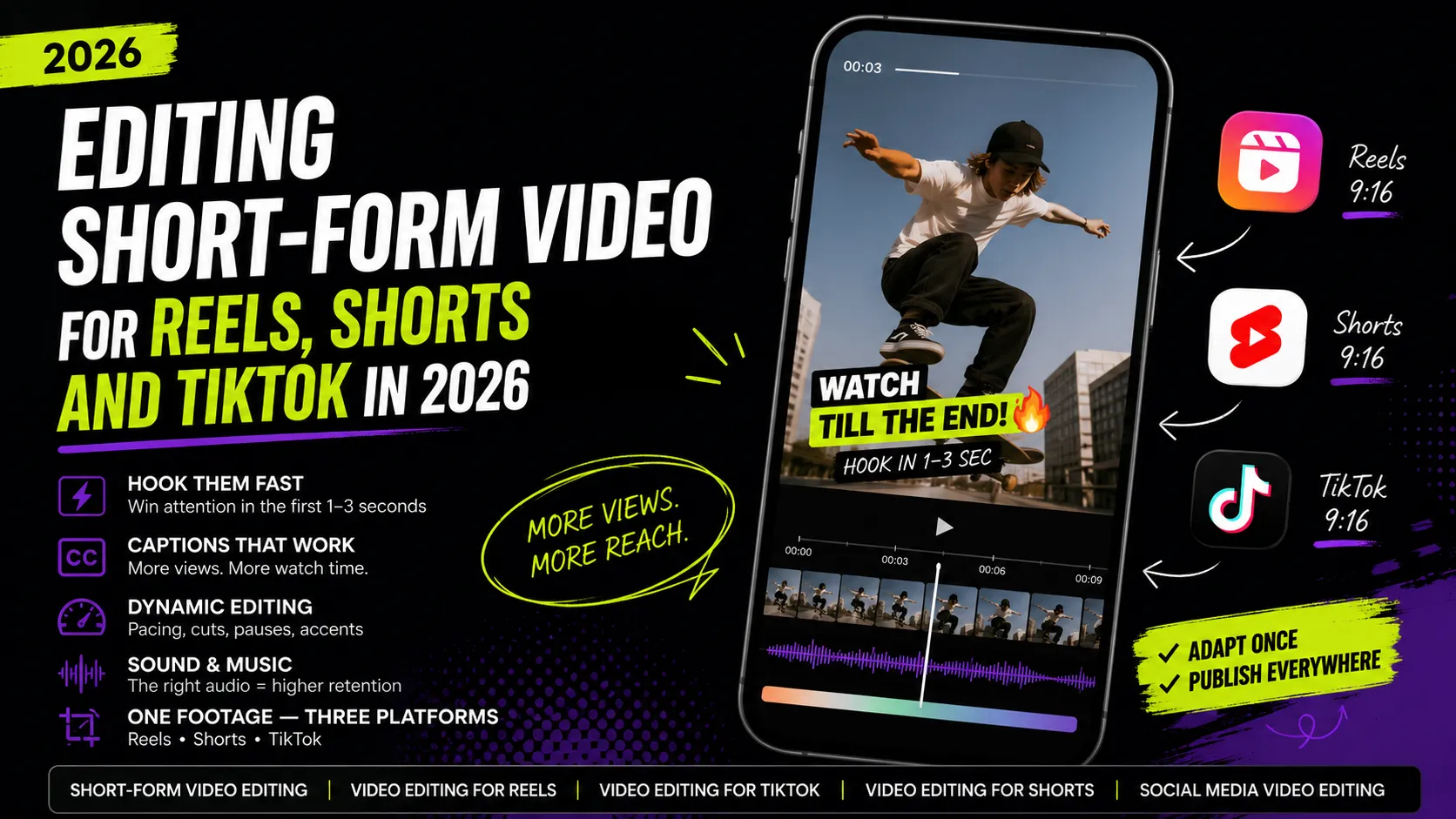
2. Short-Form Content (Reels, Shorts, TikTok)
Format: vertical clips, cutdowns from long videos, trends, promo clips for events and products.
Typical clients: brands, content creators, SMM agencies, local businesses.
Competition: very high supply, but the largest demand — short videos are among the most in-demand formats for small and mid-size businesses right now.
Why it pays: a fast editing cycle means more units of work in less time. Easy to sell in packages (10-15 clips) and to scale.
Example brief: "From one 40-minute interview, make 8 vertical cutdowns with subtitles and a hook in the first 2 seconds."
What to show in your portfolio: a set of 5-8 short videos with different hooks and subtitle styles. Prove you can hold attention from the very first frame.
3. Social Media & Performance Ads
Format: vertical ads, promo videos, UGC-style ads, product promos for Facebook, Instagram, TikTok, YouTube.
Typical clients: e-commerce brands, marketing teams, performance agencies.
Competition: medium — here they value understanding of what sells, not raw speed.
Why it pays: some of the highest rates on the list. Ads are tied to marketing budgets, and a winning creative means repeat collaborations and testing dozens of variations.
Example brief: "Produce 5 variations of one ad for an A/B test: different hooks, different calls to action, in 9:16."
What to show in your portfolio: clips with results attached — CTR, ROAS, or at least "this creative ran for 3 months." Ads sell on numbers, not beauty.
4. Online Course & E-Learning Videos
Format: course modules, tutorials, lectures, intros/outros, lesson cutdowns for social media.
Typical clients: course creators, online schools, EdTech platforms.
Competition: medium — consistency and polish matter more than trendiness.
Why it pays: e-learning keeps growing, and a course means dozens of videos. One client can mean months of work and turn into a long-term contract.
Example brief: "A 30-lesson course: clean up the speech, sync the slides, add term captions, and build one shared intro for every module."
What to show in your portfolio: one or two lessons with clean audio, readable captions, and a consistent style. Highlight your ability to hold a single template across a large volume.
5. Podcast Video Editing
Format: multicam editing, subtitles, key-moment cutdowns for social media.
Typical clients: podcasters, media, companies with a corporate podcast, agencies.
Competition: medium — demand is rising as audio podcasts move to video en masse.
Why it pays: long episodes mean bigger fees, and a fixed price per episode or series gives predictable income. Clients here are professional and long-term.
Example brief: "A weekly 60-minute episode, 2 cameras + screen share, plus 5 short cutdowns for Reels from each episode."
What to show in your portfolio: a clip of multicam editing (speaker switching) and a couple of cutdowns from the same episode — that shows the full "long video → short-form" cycle.
6. Real Estate & Business Video
Format: home and apartment tours, drone footage, corporate profiles, brand videos.
Typical clients: real estate agencies, developers, mid-size and large businesses.
Competition: low in many regions — an underrated direction with high budgets.
Why it pays: high-budget clients and few strong local competitors. Video has become a key tool for selling property, and this market pays seriously.
Example brief: "Edit a 2-minute apartment tour from drone shots and interior footage, with music and spec overlays."
What to show in your portfolio: one strong tour or corporate profile with an emphasis on lighting, color grading, and pacing. Here the quality of the image sells more than the number of pieces.
7. Gaming Content & Highlights
Format: highlight edits, funny moments, TikTok/Shorts cutdowns, intros and overlays.
Typical clients: streamers, esports teams, gaming content creators.
Competition: medium — plenty of amateurs, but few who edit truly dynamically and consistently.
Why it pays: regular publishing = loyal, long-term clients. Add motion graphics and overlays, and your rate rises noticeably.
Example brief: "From 4 hours of gameplay, cut a 10-minute highlight reel with dynamic editing to music and funny-moment clips."
What to show in your portfolio: one energetic highlight reel that shows your work with rhythm and sound, plus an intro/overlay example if you can do motion.
3 More Promising Directions
If none of the seven clicked, look at these:
- Animation & motion graphics. Explainer videos, infographics, animated logos. A higher barrier to entry, but higher fees and less competition.
- Wedding video. Emotional and seasonal, but well-paid, with strong word-of-mouth.
- Corporate training. Internal company videos: onboarding, instructions, reports. Sounds dull — pays steadily.
How to Choose Your Niche
Do not pick a niche just because it has "the biggest fees." The best niche sits at the intersection of three things. Work through the steps:
- Interests. What won't bore you on the hundredth edit? A gamer will find highlights easier than corporate profiles.
- Skills. Dynamic editing, color, motion, sound — where are you already strong? Start with what you know and pick up the rest as you go.
- Access to clients. Who do you already know? If your circle includes podcasters or e-commerce owners, that's your shortest path to a first job.
- Test projects. Don't guess — make 2-3 pieces in your chosen niche (even study projects) and watch the market's response. A portfolio quickly shows what lands.
Don't try to cover three niches at once. Pick one, build a strong portfolio around it, and only then expand into adjacent areas.
What's Next: Build a Niche Portfolio
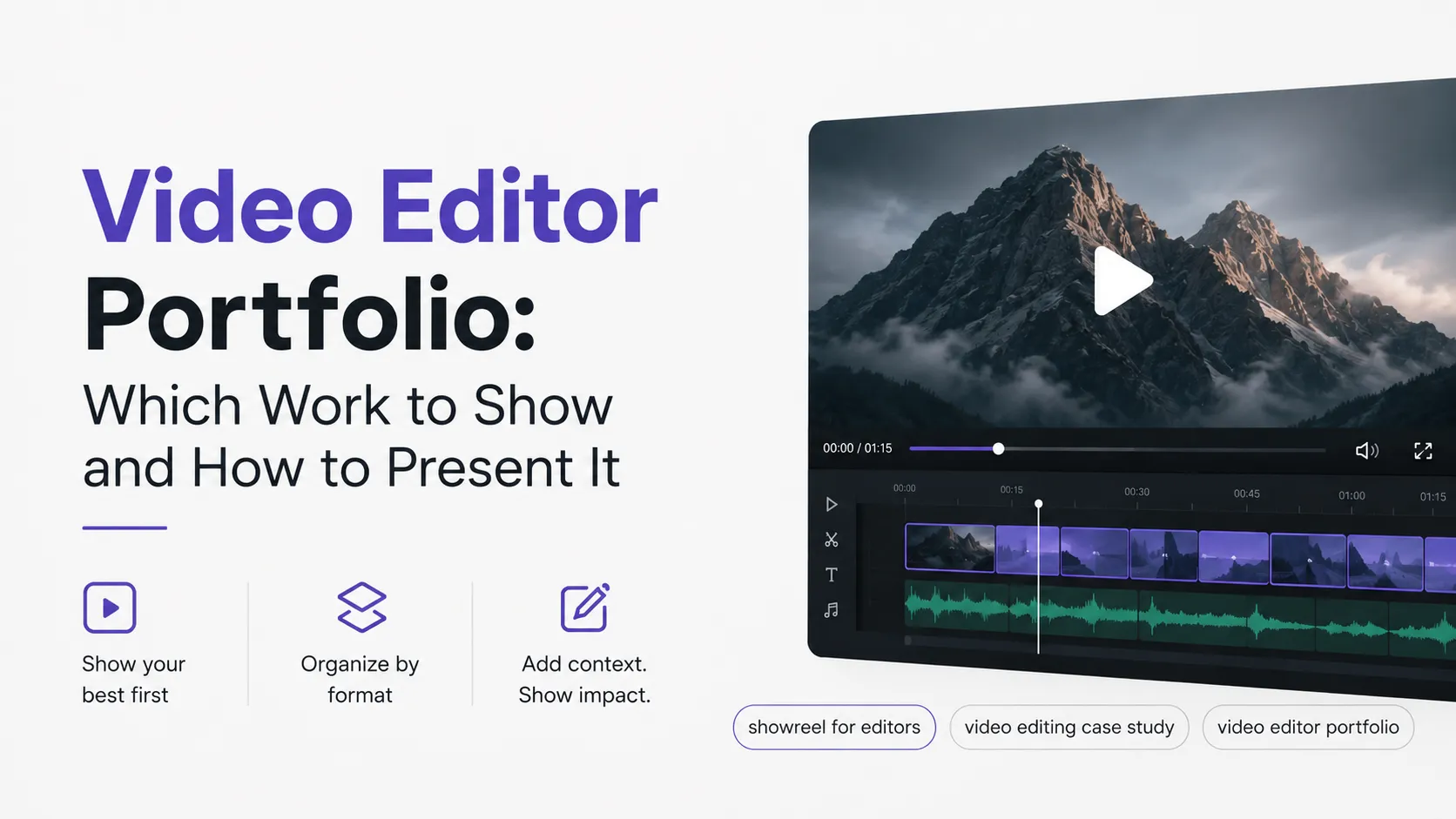
A niche without a portfolio is just an intention. A client should understand within 30 seconds that you do exactly what they need. If you're unsure how to structure your cases, start with the guide How to Make a Portfolio — A Step-by-Step Guide — the "problem → solution → result" principles work for video just as well as for design.
Then publish your work where it will be seen. Add projects tagged for your niche, list your skills on your profile, and let your editing do the talking.
Ready to act?
- Create your own portfolio: https://searchtalent.dev/en/projects/new
- Skill and technology directory: https://searchtalent.dev/en/talents/skill
- Browse other specialists' projects: https://searchtalent.dev/en/projects
- More articles: https://searchtalent.dev/en/articles