
When people say a frontend developer is "the person who makes the buttons," that is both true and a big oversimplification. In this article we will unpack what a frontend developer actually does: what they are responsible for, which skills they need, how the role differs from backend and full-stack, and how to break in from scratch.
What a Frontend Developer Is, in Plain Words
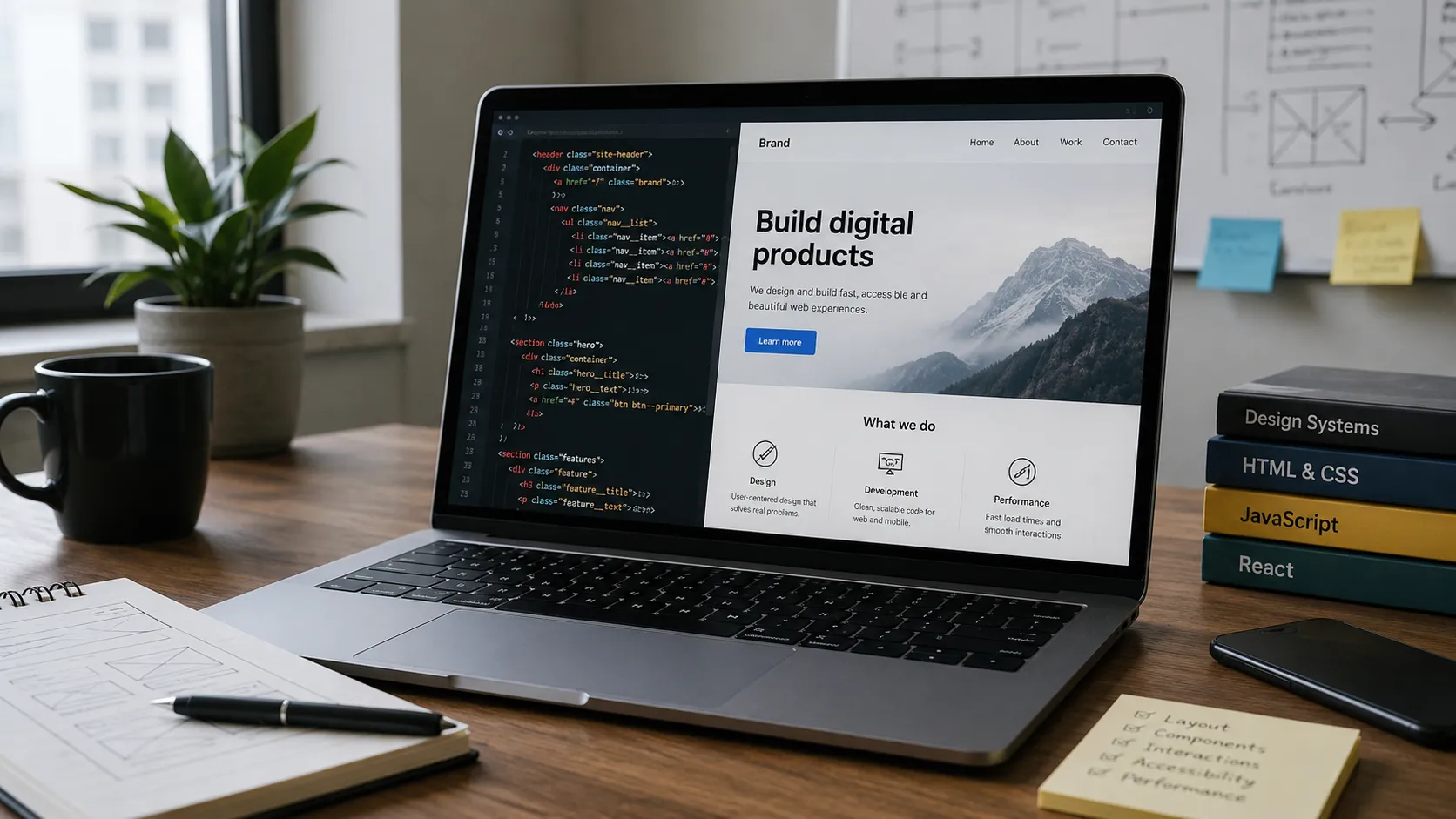
A frontend developer builds the part of a product that users see and interact with: the site interface, buttons, forms, animations, and page layout. Everything that happens inside the browser tab, on the user's side, is their responsibility.
In plain terms: the backend prepares the data, and the frontend turns it into a clear, convenient, and good-looking screen. If an app reacts slowly to clicks, a form breaks on mobile, or text is unreadable — that is a frontend question.
What a Frontend Developer Does: Typical Responsibilities
The job is far more than "markup." A typical set of tasks:
- Building the interface from a designer's mockup — accurately, responsively, across screen sizes.
- Client-side logic: handling clicks, validating forms, updating the page dynamically without a reload.
- API integration — fetching data from the backend and showing it to the user.
- Performance optimization so the page loads fast and stays smooth.
- Accessibility so people with visual or motor impairments can use the product.
- Cross-browser support: consistent behavior in Chrome, Safari, and Firefox.
Skills a Frontend Developer Needs
The foundation barely changes over the years; the layer on top does:
- HTML and CSS — the absolute basics: page structure and styling.
- JavaScript — the language that brings the interface to life. Frontend does not exist without it.
- A framework — most often React, sometimes Vue or Angular. A tool for complex interfaces.
- Git — version control that no team works without.
- Responsive layout — from mobile to a large monitor.
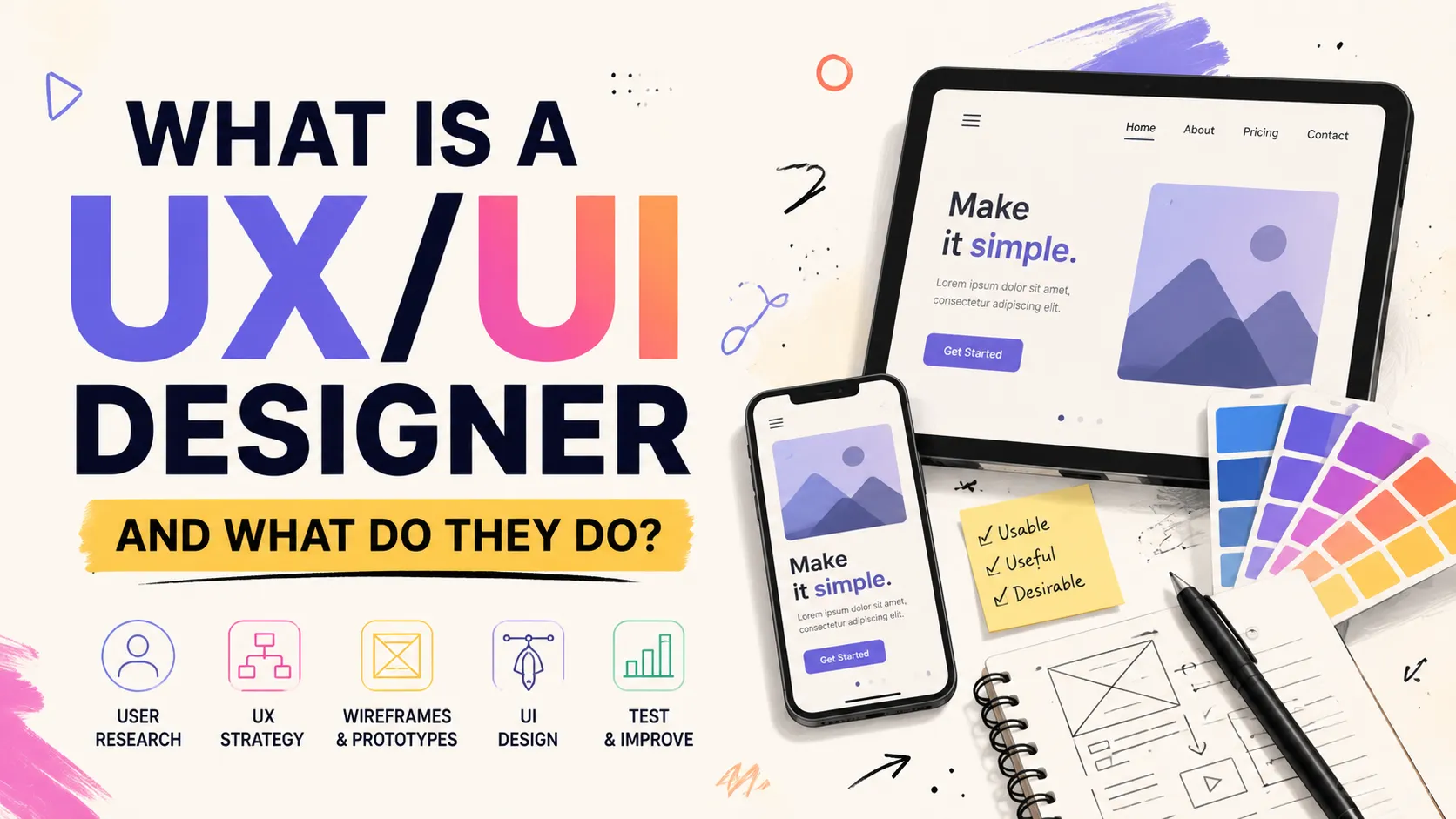
- Working with mockups — Figma at least at the "read sizes, colors, spacing" level.
Soft skills matter too: reading other people's code, asking the designer the right questions, and defending your decisions.
Frontend, Backend, and Full-Stack: The Difference
- Frontend — the visible part, running in the user's browser.
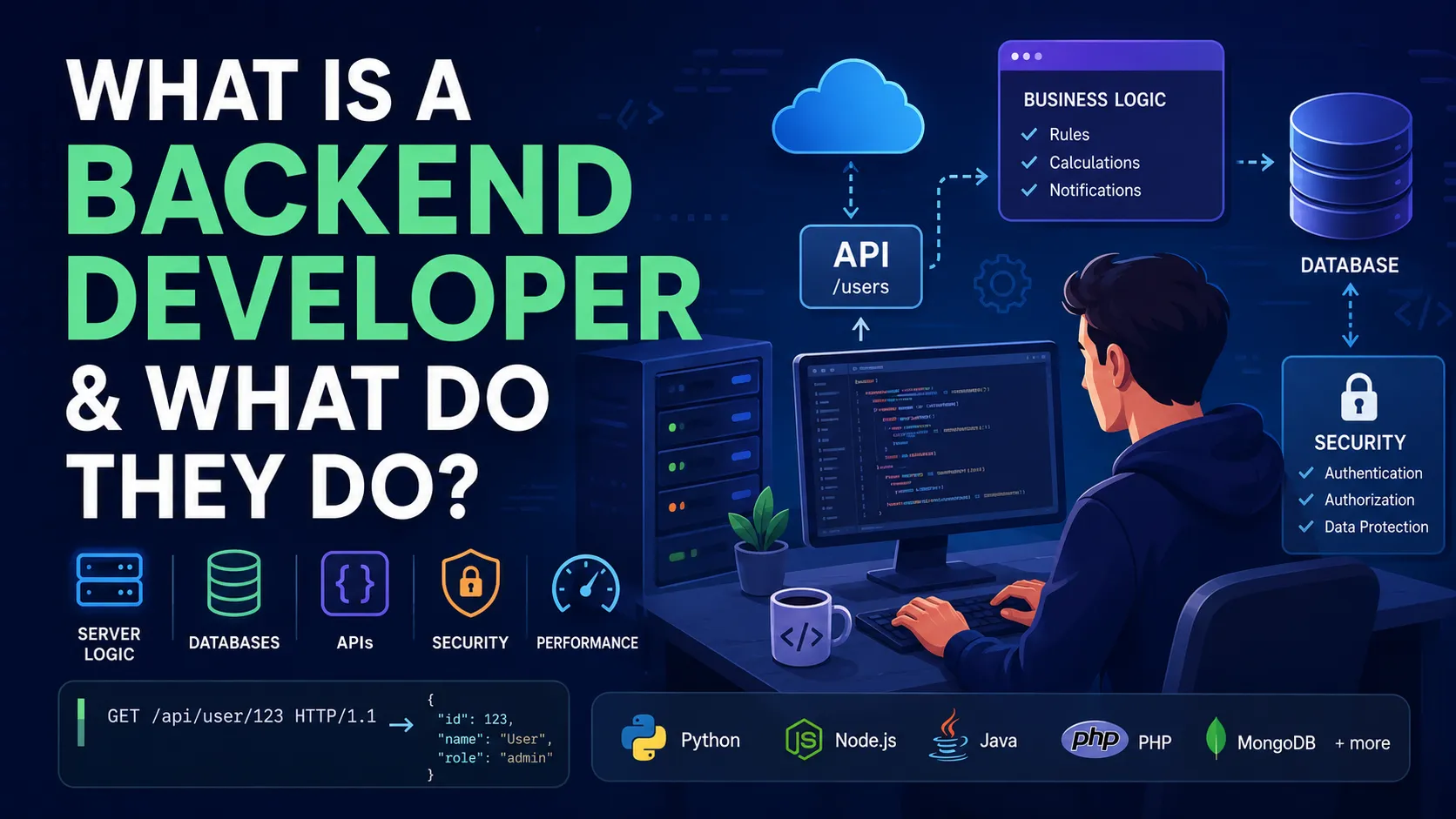
- Backend — the server side: databases, business logic, security. The user never sees it.
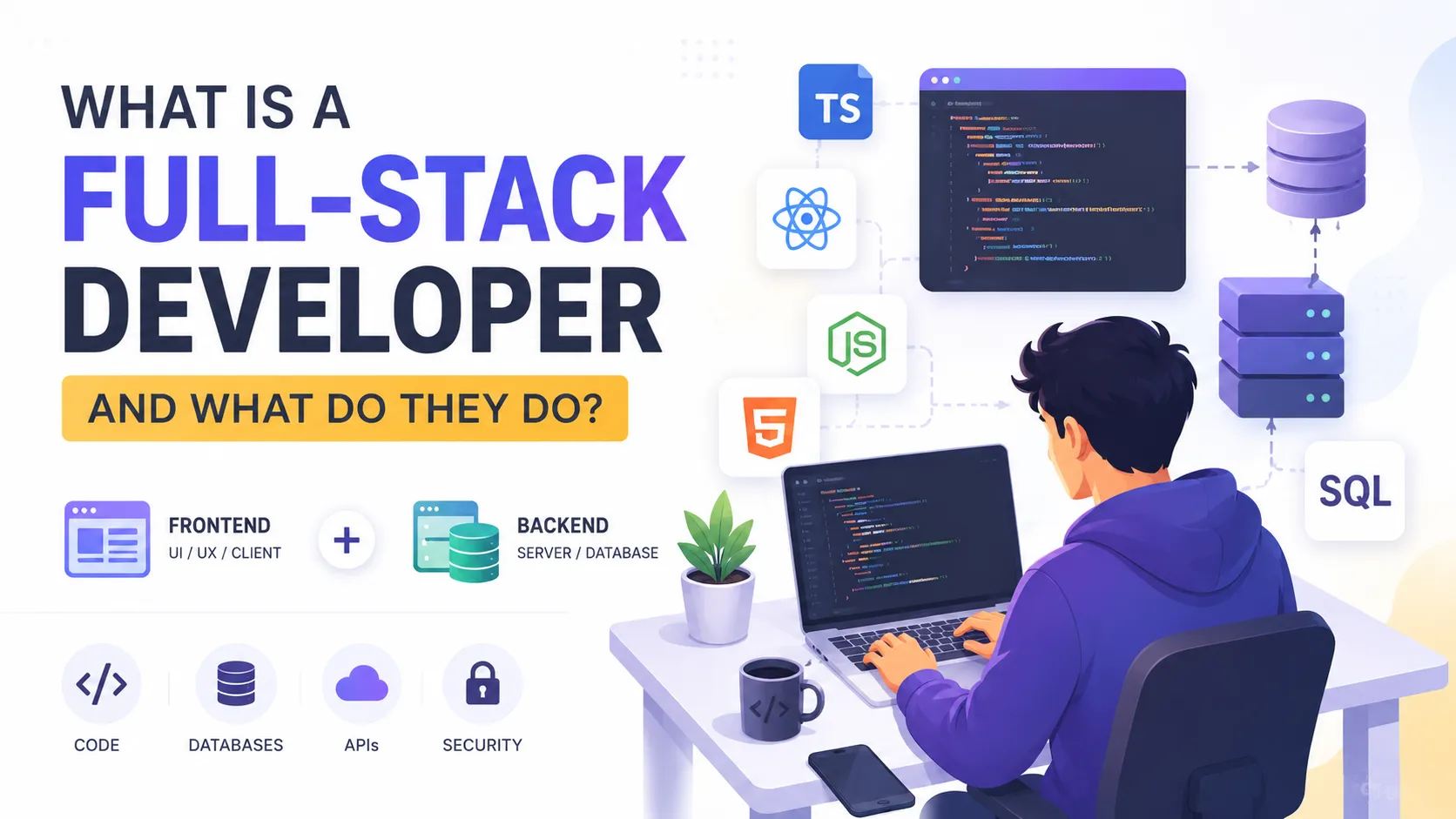
- Full-stack — someone who does both at a sufficient level.
A restaurant analogy: frontend is the dining room, menu, and waiter; backend is the kitchen and storeroom; full-stack is the person who steps into either when needed.
How to Become a Frontend Developer from Scratch
A rough roadmap for a beginner:
- Learn HTML + CSS and build a few simple pages.
- Master JavaScript — the biggest and most important stage.
- Pick one framework (React is the safest choice for a first job).
- Build a portfolio of 3–5 projects: they matter more than certificates. Show not just the result, but your thinking.
- Publish your work where it will be seen, and start applying for junior roles.
You grow gradually: junior → middle → senior. Salary depends on level, stack, and region, so anchor your expectations to real job postings, not to "average numbers from the internet."
FAQ
Does a frontend developer need math? For most tasks, a school level is enough. Heavy math matters more in narrow areas (graphics, games, data visualization) than in typical product development.
How long does it take to become a junior frontend developer? With intensive study, realistically 6 to 12 months. The main accelerator is not the number of courses, but the number of projects you build yourself.
What matters more: a degree or a portfolio? For frontend, almost always the portfolio. Employers want to see code and real projects, not just a line in your education.
Ready to act?
- Browse talents by direction: https://searchtalent.dev/en/talents/role
- Skill and technology directory: https://searchtalent.dev/en/talents/skill
- Create your own portfolio: https://searchtalent.dev/en/projects/new