
When people say "frontend makes it pretty, backend makes it work," that is almost true. In this article we will unpack what a backend developer actually does: what they are responsible for, which skills and technologies they need, how the role differs from frontend and full-stack, and how to break in from scratch.
What a Backend Developer Is, in Plain Words
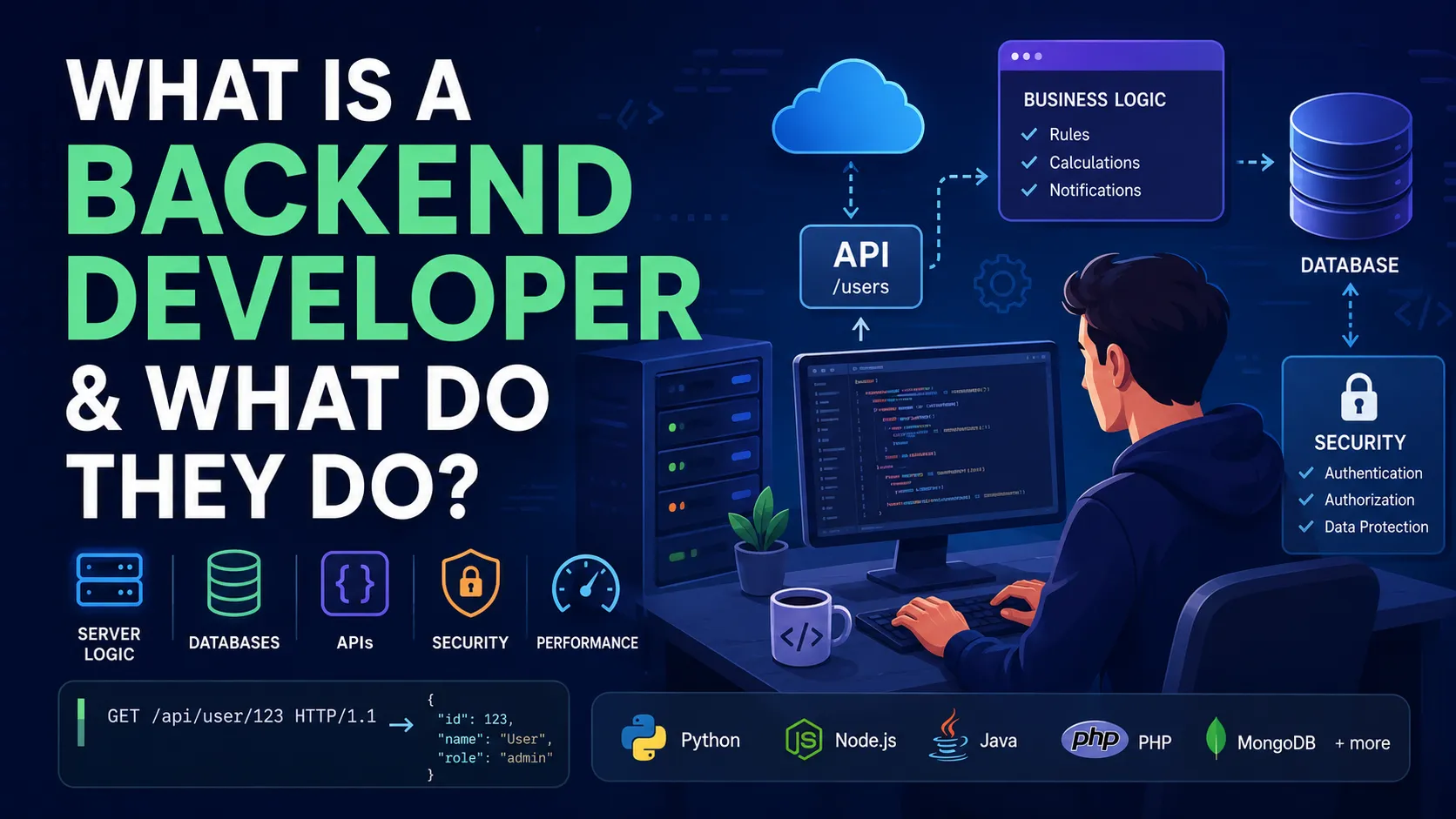
A backend developer builds the server side of a product — the logic, data handling, and security — which users never see but without which nothing works.
In plain terms: everything that happens "behind the scenes" after you click a button is the backend's responsibility. You enter a login and password → the backend verifies them, pulls your profile from the database, and decides what you're allowed to see. The frontend merely displays the result nicely.
What a Backend Developer Does: Typical Responsibilities
The job is far more than "writing a server." A typical set of tasks:
- Business logic — the rules the product runs by: who can do what, how a price is calculated, when to send a notification.
- Working with databases — storing, searching, and updating data, and optimizing queries.
- APIs — the interface through which the frontend and external systems get data from the server.
- Authentication and authorization — who signed in and what they are allowed to do.
- Security — protecting data, passwords, and payments from attackers.
- Performance and reliability — so the server handles load and doesn't crash.
Skills a Backend Developer Needs
- A programming language — a server-side one:
Python,JavaScript(Node.js),Java,PHP,Go, orC#. - Databases and
SQL— backend doesn't exist without working with data. APIs and theHTTPprotocol — how client-server communication works.- Git — version control that no team works without.
- Security basics — password hashing and protection against common attacks.
- An architectural mindset — how to break a complex system into understandable parts.
Soft skills matter too: reading other people's code, thinking through edge cases, and defending technical decisions.
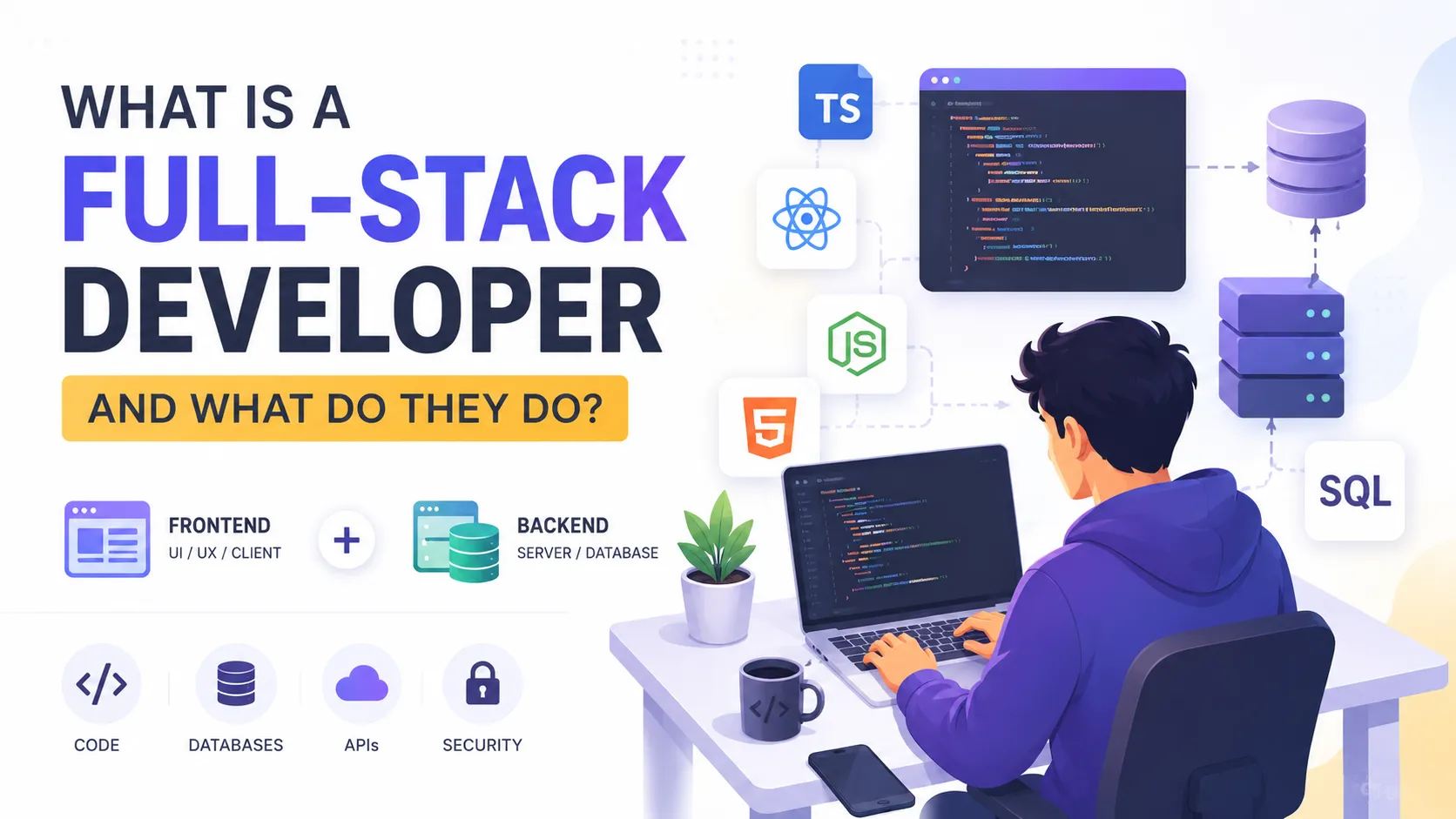
Backend, Frontend, and Full-Stack: The Difference
- Frontend — the visible part, running in the user's browser.
- Backend — the server side: databases, business logic, security. The user never sees it.
- Full-stack — someone who does both at a sufficient level.
A restaurant analogy: frontend is the dining room, menu, and waiter; backend is the kitchen, storeroom, and recipes; full-stack is the person who steps into either when needed.
The Backend Stack: Languages and Technologies
There is no "one true" language — it matters more to know one language and its ecosystem well.
Popular backend stacks and where you'll meet them
Node.js(JavaScript/TypeScript) — the same language as the frontend; popular for startups and real-time apps.Python(Django,FastAPI) — readable, strong in data and AI, beginner-friendly.Java(Spring) — the classic of large enterprise systems and banks.PHP(Laravel) — still a huge share of the web, especially e-commerce.Go— when you need speed and high load.C#(.NET) — strong in enterprise and gaming.
Advice for beginners: pick a stack not by "hype" but by what employers in your region actually hire for, and learn it in depth.
How to Become a Backend Developer from Scratch
A rough roadmap for a beginner:
- Pick one language (
PythonorNode.jsare beginner-friendly) and learn its basics. - Master databases and
SQL— that's half of a backend developer's work. - Learn to build
APIs and understand howHTTPworks. - Build a portfolio of 3–5 projects: a small service with sign-up, a database, and an API is worth a dozen certificates.
- Publish your work where it will be seen, and start applying for junior roles.
You grow gradually: junior → middle → senior. Salary depends on level, stack, and region, so anchor your expectations to real job postings, not "average numbers from the internet."
FAQ
Does a backend developer need math? For most product tasks, a basic level and solid logic are enough. Heavier math matters more in narrow areas (algorithms, data, machine learning) than in typical server development.
Which is harder — frontend or backend? Neither is "harder" — they're different. Backend suits people who enjoy logic, data, and systems thinking; frontend suits those who enjoy a visible result and working with interfaces.
Which language should I start backend with? The safest start is Python or Node.js: a low barrier to entry, plenty of materials, and real job openings. The key is taking one language to a confident level, not hopping between several.
Ready to act?
- Browse talents by direction: https://searchtalent.dev/en/talents/role
- Skill and technology directory: https://searchtalent.dev/en/talents/skill
- Project technologies: https://searchtalent.dev/en/projects/tag
- Create your own portfolio: https://searchtalent.dev/en/projects/new